


Spanish Learning Portfolio
My Progress, Practice, and Cultural Discoveries
Overview
Welcome to my Spanish learning portfolio. This website shows some of my work and progress in Spanish. Throughout this course, I have learned greetings, new vocabulary, pronunciation, grammar, and about cultures I did not know much about before. These samples show how my confidence and understanding have grown.
What I Have Learned
This course has helped me understand that learning Spanish is more than memorizing words. I have learned how to communicate, practice pronunciation, understand cultural differences, and become more comfortable using Spanish.
Three Portfolio Sections
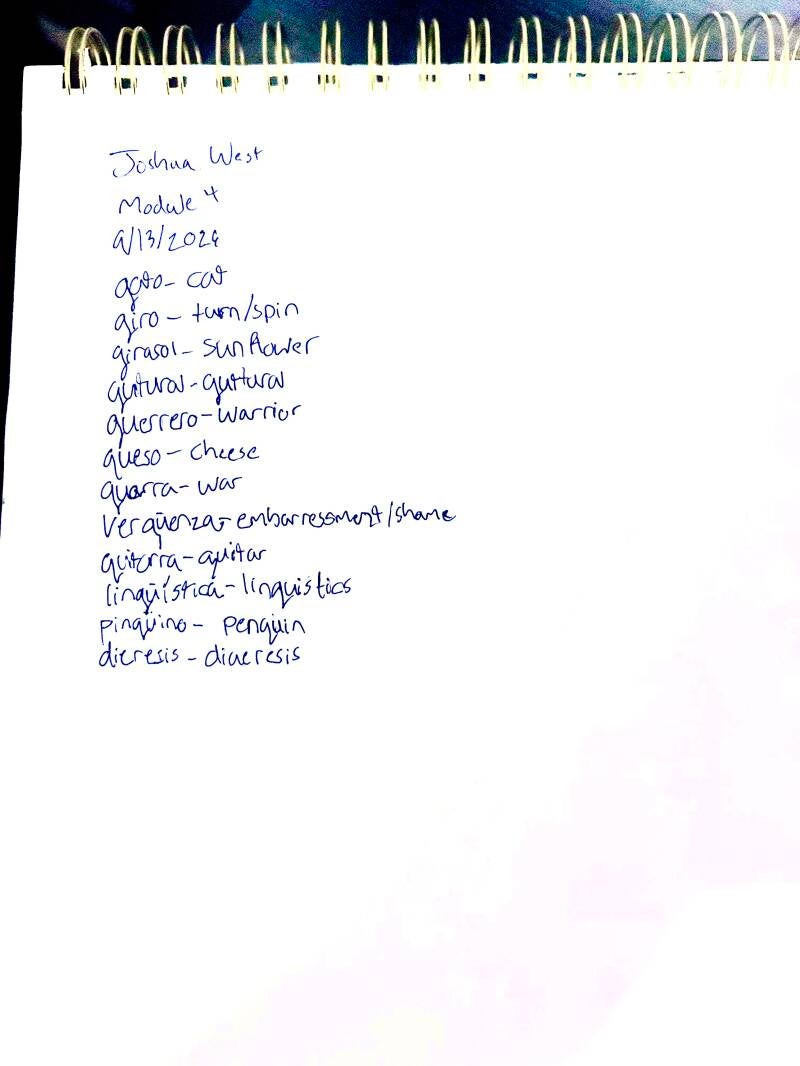
Module 4
Learning vocabulary and developing better study strategies.
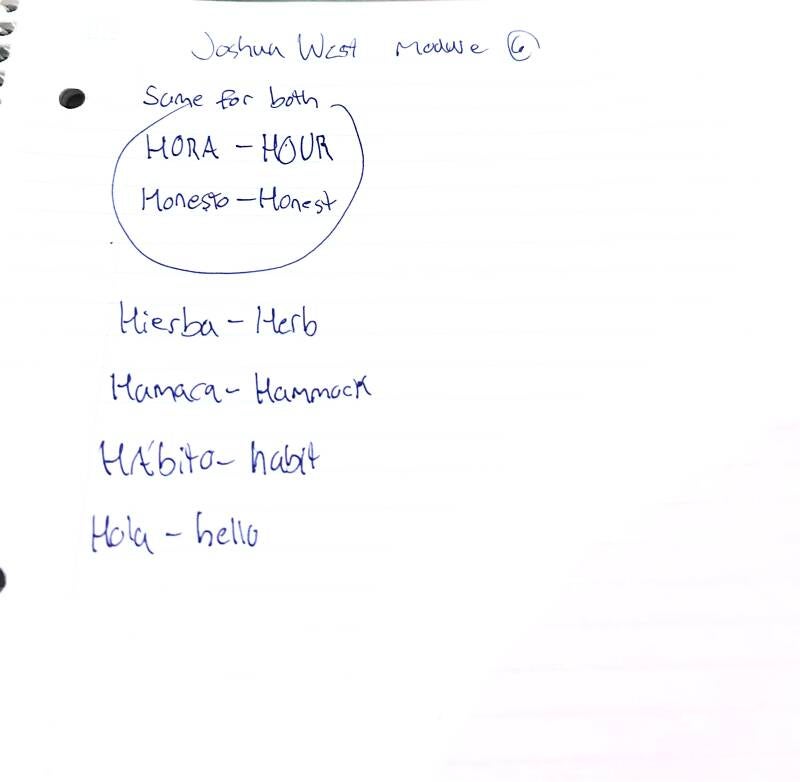
Module 6
Practicing Spanish pronunciation and speaking with more confidence.
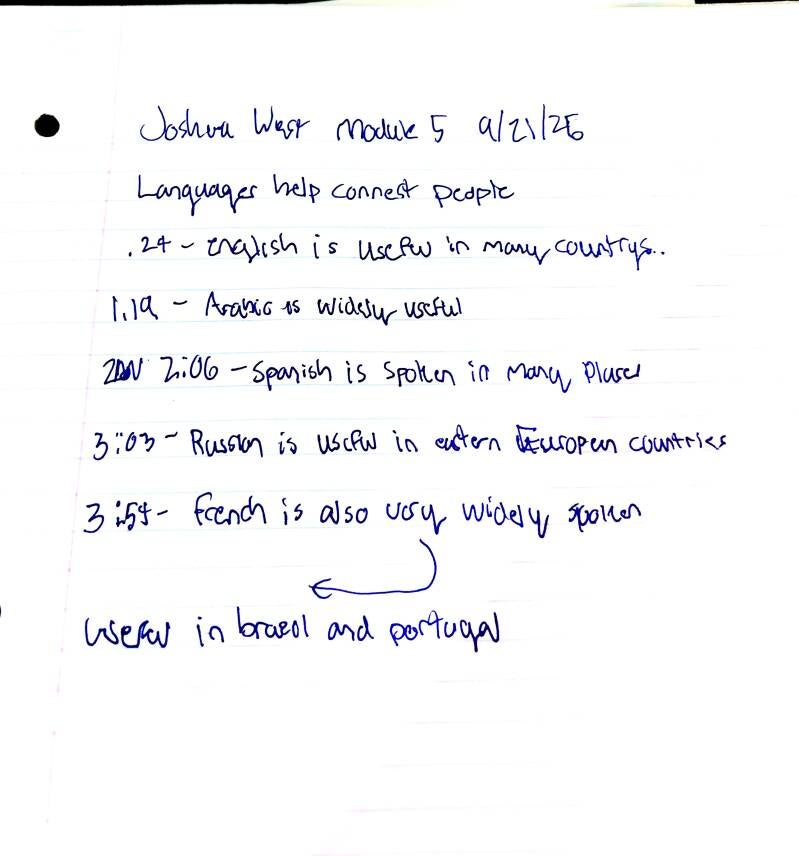
Module 5
Learning how language connects to different Spanish-speaking cultures.
Core Pillars of My Learning Journey
This portfolio captures consistent progress across four primary areas: greeting conventions, active vocabulary acquisition, spoken pronunciation, and cultural awareness across the Spanish-speaking world.
Greetings & vocabulary
Building foundational communication through routine greetings, everyday phrases, and active retrieval strategies.
Pronunciation station
Practicing vowel sounds, intonation, and rhythm to steadily boost spoken confidence and natural cadence.
Cultural perspectives
Exploring regional nuances including informal and formal pronouns like tú, usted, and vos across different countries.
Daily habit & growth
Reflecting on spaced repetition, making meaningful conceptual connections, and staying accountable every week.
Growing in confidence with every lesson
Language acquisition is more than memorizing word lists; it requires active listening, vocal experimentation, and understanding how identity shapes interaction. Review each module to track my speech recordings and written assessments.
Module Selections and Work
Module 4 Section 3.
Part A
¿Cómo?
What?
¿Me lo puedes repetir, por favor?
Could you repeat that, please?
Otra vez.
Again.
No entiendo.
I don’t understand.
Una vez más, por favor.
One more time, please.
¿Qué dijiste?
What did you say?
Más lento, por favor.
Slower, please.
Part B
No comprendo.
I don’t understand.
¿Puedes explicarlo de otra manera?
Can you explain it another way?
¿Qué significa eso?
What does that mean?
Module 5 Section 4.
Part 1
1. ¿Hablas inglés? — Do you speak English?
I would use this phrase when traveling or meeting someone who may speak English.
2. No hablo español. — I do not speak Spanish.
I would use this phrase when I need to explain that I do not understand Spanish well.
Part 2
https://voca.ro/1aiz9QrEQUXd
Part 3
United States — Estados Unidos
United Kingdom — Reino Unido
Canada — Canadá
Australia — AustraliA
Part 4
The hardest part of the video was understanding some of the Spanish when the speaker talked
quickly. Watching the video again and slowing down the speed helped me understand the
words better.
Module 6 Section 7.
English:
A siesta is a break in afternoon, usually after lunch. People can rest or take a short nap. I think
siestas is good because you can relax and have more energy later.
Spanish:
Una siesta es un descanso en la tarde, normalmente después del almuerzo. Las personas
puede descansar o dormir un poco. Me gusta la siesta porque ayuda tener más energía.
2. Sobremesa
English:
Sobremesa is when people stay at the table after eating and talk with family or friends. I like it
because people get more time together. In my family, sometimes we talk after eating too.
Spanish:
La sobremesa es cuando las personas quedan en la mesa después de comer y hablan con
familia o amigos. Me gusta porque ellos pasa más tiempo juntos. En mi familia, a veces
hablamos después de comer también.
Translation tool used: SpanishDict.
Additional thoughts
With each module, I had my own takeaways based on what I felt I gained the most from that part of the course. These takeaways explain what stood out to me, what I learned, and how each module helped me improve my Spanish skills and understanding of the culture
Module 4 Key Takeaways
-
I learned different ways to practice Spanish even when I do not have a native Spanish speaker nearby.
-
I learned that language practice can be built into everyday activities instead of only happening during class.
-
I practiced using the strategies from the video and thought about which methods worked best for me.
-
I learned that practicing consistently can help me become more comfortable using Spanish.
-
I identified challenges I experienced while practicing and thought about ways to improve.
-
This section helped me realize that I can continue practicing Spanish outside of class using simple strategies.
Module 6 Key Takeaways
-
I learned about the siesta and how it can be part of daily life and routines in Spain.
-
I learned about sobremesa, which is the time people spend talking and socializing after a meal.
-
I learned that daily routines can be influenced by culture, family, and traditions.
-
I realized that people in different countries may have different ideas about how to spend their time.
-
I learned that meals can be about more than just eating; they can also be an opportunity to connect with family and friends.
-
This activity helped me understand that learning Spanish also means learning about the lifestyles and traditions of Spanish-speaking cultures.
-
It made me think about how my own routines with family and friends compare with routines in Spain.
Module 5 Key Takeaways
-
I learned useful phrases for asking someone if they speak Spanish.
-
I learned how to explain my own language abilities.
-
I practiced listening to Spanish and figuring out meaning from context.
-
I learned that slowing down a recording and listening more than once can help me understand Spanish better.
-
I became more comfortable using Spanish phrases that could be useful in real conversations.
Photos of my work
Why did I choose them?
Module 4
Module 4 helped me learn how to keep a conversation going when I do not understand something. I learned phrases like “No entiendo,” “¿Me lo puedes repetir, por favor?” and “Más lento, por favor.” I also learned question words and practiced listening to Spanish. One challenge was understanding people when they spoke quickly. Listening again and slowing down the video helped me improve. I chose this work because it shows that I am becoming more comfortable communicating in Spanish.
Module 6
Module 6 helped me learn about daily routines, time, and Spanish culture. I learned about the siesta, which is an afternoon break, and sobremesa, when people stay together after a meal and talk. I liked connecting these traditions to my own family because we sometimes talk after eating too. I also used SpanishDict to help check my Spanish. I chose this work because it shows that I am learning both the language and the culture behind it.
Module 5
Module 5 taught me useful phrases like “¿Hablas inglés?” and “No hablo español.” I learned how these phrases could help me when traveling or meeting someone who speaks another language. I also practiced personal pronouns and the Spanish J sound. Listening to the video more than once helped me understand it better. I chose this work because it shows my progress in speaking, listening, and communicating in real-life situations.
Ready to hear the audio reflections?
Listen to original audio samples demonstrating my pronunciation drills, study routine breakdowns, and cultural self-introductions recorded throughout the semester.
Module 4 https://voca.ro/165yiqAmCGH1
Module 6 https://voca.ro/1ddzVGF3u1ZS
Module 5 https://voca.ro/129z0nKA4E9f
My Reflection
Over the course of Modules 4, 5, and 6, I have learned much more than just Spanish vocabulary. I have learned how to ask questions, talk about routines, communicate when I do not understand something, and understand how language connects to different cultures. I especially appreciate this course because it has taught me greetings, new words, useful phrases, and cultural ideas that I did not know before.
In Module 4, I learned about Spanish question words and different ways to communicate when I do not understand someone. The Language Learning Lab also showed me that I can practice Spanish even without having a native Spanish speaker around. In Module 5, I learned how to ask someone if they speak Spanish, practiced personal pronouns, and worked on the Spanish “J” sound. In Module 6, I learned how to describe daily routines, tell time, and talk about days of the week. I also learned about the “H” sound and cultural traditions such as the siesta and sobremesa in Spain.
One of my biggest challenges has been remembering new vocabulary and feeling confident when speaking Spanish out loud. Repetition, practicing my pronunciation, and listening to Spanish recordings more than once have helped me. I also learned to use context before immediately depending on a translation tool. This helped me understand that I can figure out more Spanish on my own than I originally thought.
Octagonal thinking has been significant because it encouraged me to look at Spanish from different perspectives instead of focusing on only vocabulary or grammar. I can connect language to communication, culture, pronunciation, daily life, and my own experiences.
The lesson that surprised me the most was learning about tú, usted, and vos and realizing that there are different ways to say “you” depending on the situation and country. Contrary to my initial expectations, I have learned that studying Spanish is also a way of learning about people and cultures.
Moving forward, I want to improve my vocabulary and speaking confidence. I plan to practice Spanish for at least 10 minutes a day, review words I have difficulty remembering, listen to Spanish regularly, and continue practicing pronunciation. My goal is to become more comfortable using Spanish in real conversations and continue learning about Spanish-speaking cultures.
Project details
Spanish learning portfolio
Midterm Spanish Project
October 4th, 2026.
Create Your Own Website With Webador